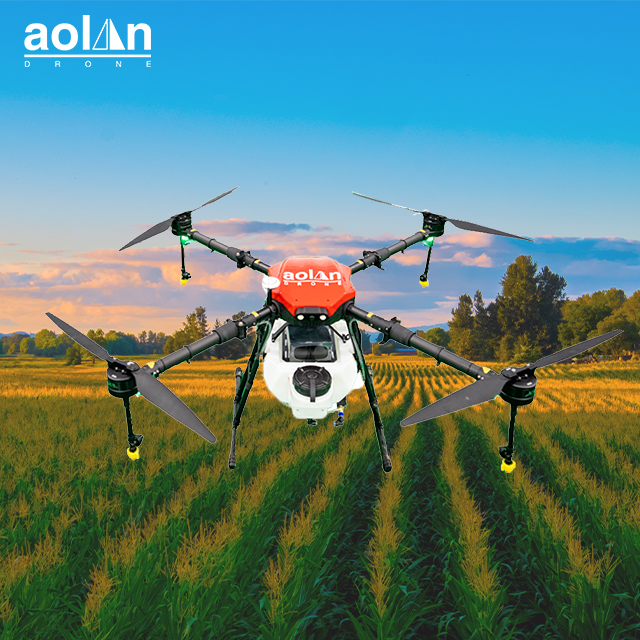
**Innovative Drone Technology Revolutionizes Fertilizer Spraying in Agriculture**In a significant leap forward for modern agriculture, the advent of drone technology for fertilizer spraying is transforming the way farmers manage their crops. This cutting-edge solution enables precise, efficient, and environmentally friendly application of fertilizers, optimizing yields while minimizing resource wastage and environmental impact.The introduction of drones specifically designed for agricultural fertilization marks a pivotal moment in farming practices worldwide. These drones are engineered to cover expansive farmland with speed and accuracy, something traditional methods struggle to achieve without excessive labor, time, and input costs.**Precision and Efficiency in Fertilizer Application**Agricultural experts have long recognized the importance of precise fertilizer application in maximizing crop health and ensuring sustainable farming practices. Conventional approaches—such as manual spreading and tractor-mounted sprayers—often result in uneven coverage, overlapping areas, and fertilizer drift, leading to inefficiencies and potential harm to nearby ecosystems.Drones for fertilizer spraying address these challenges head-on. Equipped with advanced GPS and sensors, these unmanned aerial vehicles (UAVs) map out fields meticulously and apply fertilizer exactly where needed. This targeted spraying reduces excess use of fertilizers, lowers production costs, and mitigates the risk of runoff into nearby water sources.Moreover, drone technology enables farmers to treat difficult terrain that is otherwise hard to access with heavy machinery. Hillsides, uneven plots, and wet areas can be fertilized without damaging the soil structure or compaction issues that traditional machinery often causes.**Technological Advancements Driving Change**The drones in use today represent the culmination of several technological innovations. High-precision GPS systems ensure accurate navigation and positioning over fields. Advanced spraying mechanisms control droplet size and distribution, optimizing coverage and reducing drift caused by wind. Additionally, autonomous flight paths programmed through specialized software allow drones to operate with minimal human intervention, increasing productivity and safety.Some drones also incorporate multispectral imaging and real-time monitoring capabilities. This integration allows for dynamic adjustment of fertilizer application rates based on crop health data gathered during flight. Such precision agriculture techniques enable tailored nutrition plans for crops, improving overall yield quality and quantity.**Environmental and Economic Benefits**Beyond enhancing productivity, fertilizer spraying drones offer critical environmental advantages. By minimizing excessive fertilizer use, these drones help reduce chemical runoff that contributes to water pollution and eutrophication in aquatic ecosystems. This reduction is crucial for maintaining biodiversity and ensuring clean water supplies.Economically, drones lower labor requirements and operational costs. Traditional fertilizing methods might require multiple workers, tractors, or aircraft, each incurring significant expenses. Drones streamline this process, complete spray cycles quickly, and cut down on fuel and chemical consumption.For smallholder farmers and large-scale agribusinesses alike, the adoption of drone technology leads to cost savings and higher profit margins. With global food demand rising, such innovations are vital for sustainable intensification, ensuring sufficient food production without overburdening natural resources.**Empowering Farmers Through Technology**The company behind this drone technology has consistently emphasized empowering farmers with practical, reliable tools. Their drones undergo rigorous testing in diverse agricultural environments to validate performance and suitability for various crop types and climates.In addition to hardware development, the company provides comprehensive training and support services. Farmers receive guidance on drone operation, maintenance, and data interpretation, ensuring they can maximize the benefits of this advanced technology. User-friendly software solutions simplify flight planning and fertilizer management, making adoption accessible even for those new to UAVs.Collaboration with agricultural institutes and government bodies further enhances the technology’s reach and effectiveness. Together, these efforts contribute to widespread modernization of farming practices, promoting food security and rural development.**Looking Ahead: The Future of Fertilizer Application**As drone technology continues to evolve, its integration into precision agriculture is poised to deepen. Future models are expected to feature longer flight durations, increased payload capacities, and enhanced AI-driven decision-making. These improvements will further optimize fertilizer application and reduce environmental footprint.The proliferation of drone-based fertilizer spraying also opens doors to complementary innovations in crop monitoring, pest management, and irrigation. Combined, these technologies will empower farmers with comprehensive, data-driven insights and automation capabilities.In conclusion, the emergence of drones for fertilizer spraying represents a transformative advancement in agriculture. By harnessing sophisticated technology, farmers gain unprecedented control over nutrient management, drive efficiency gains, and contribute to environmental stewardship. As this technology becomes more widely adopted, it promises to play a key role in shaping the future of sustainable farming worldwide.
Read More