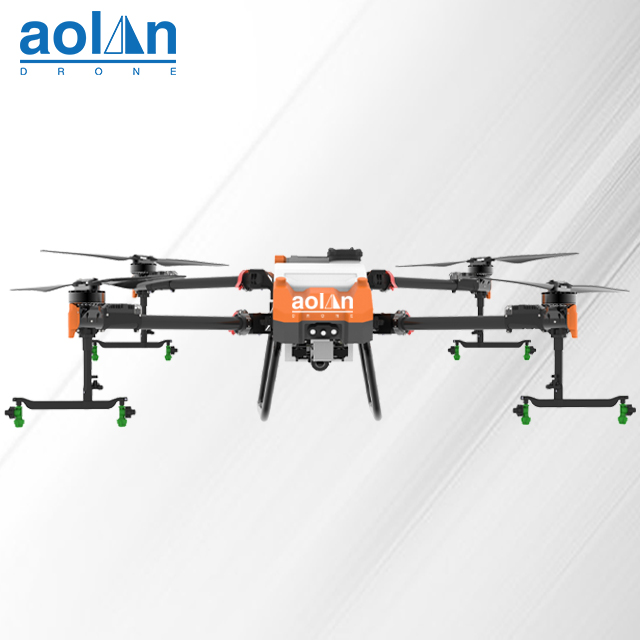
Effective Drone Fumigation Techniques for Modern Agriculture

By:Admin on 2025-11-20 02:32:49

**Advancing Agriculture with Drone Fumigation Technology**In an era where technology continuously reshapes traditional industries, agriculture stands at the forefront of innovation. One of the most promising developments is the introduction of drone fumigation technology, which is revolutionizing pest control and crop management practices worldwide. This advancement not only enhances efficiency but also promotes sustainable farming, ensuring better yields and healthier crops with reduced environmental impact.**The Rise of Drone Fumigation in Agriculture**Drone fumigation involves the use of unmanned aerial vehicles (UAVs) equipped with specialized spraying systems to disperse pesticides, fertilizers, and other agricultural chemicals over crop fields. Unlike conventional methods that rely heavily on manual labor or large machinery, drones offer unparalleled precision, speed, and adaptability. They can navigate challenging terrains, access remote or hard-to-reach areas, and apply chemicals evenly, minimizing wastage.This technology addresses several long-standing challenges in agricultural pest management:- **Precision Application:** Drones are equipped with GPS and advanced sensors, allowing them to spray only targeted areas, reducing chemical use and preventing over-application. - **Time and Labor Savings:** Automated flights cover large areas swiftly, significantly cutting down the time and human effort required for fumigation. - **Enhanced Safety:** By removing the need for workers to manually apply pesticides in fields, drones reduce human exposure to hazardous chemicals. - **Environmental Protection:** Precision spraying reduces chemical runoff and contamination, supporting eco-friendly farming practices.**Company Overview: Pioneers in Drone Fumigation**At the heart of this technological evolution stands a pioneering company specializing in drone fumigation solutions. Founded on the principles of innovation, sustainability, and agricultural empowerment, the company has developed advanced UAV systems tailored specifically for agricultural use. Their drones are engineered with high-capacity tanks, precision nozzles, and intelligent flight control software, making them highly effective in managing large-scale agricultural operations.The company’s mission is to enable farmers to increase productivity while safeguarding environmental and human health. They offer comprehensive training and support services, ensuring that clients can maximize the benefits of drone fumigation technology. Their commitment to research and development keeps them at the cutting edge, continuously refining their products to meet diverse agricultural demands worldwide.**Industry Impact and Future Prospects**The adoption of drone fumigation is gaining momentum across various farming sectors, from row crops and orchards to vineyards and plantations. Farmers report significant improvements in pest control efficacy and crop health, citing the drones’ ability to respond rapidly to infestations and changing field conditions.Moreover, the integration of drone technology with data analytics and artificial intelligence opens new frontiers in precision agriculture. By collecting real-time data on crop health, pest populations, and environmental conditions, drones facilitate informed decision-making. This synergy enhances not only fumigation accuracy but also overall farm management practices.Looking ahead, the potential applications of drone technology in agriculture continue to expand. Innovations such as multi-spectral imaging, automated disease detection, and variable-rate spraying are on the horizon. These advancements promise to further reduce chemical inputs, lower costs, and improve sustainability.**Challenges and Considerations**Despite its numerous advantages, drone fumigation also faces challenges that need addressing. Regulatory frameworks governing drone operations vary by region and can impact deployment speed. Ensuring pilot training, safety standards, and privacy protections are equally important.Additionally, initial investment costs for drone equipment and training may pose barriers for small-scale farmers. However, as technology matures and becomes more accessible, these obstacles are expected to diminish.**Conclusion**Drone fumigation represents a transformative leap in agricultural pest management, merging cutting-edge technology with age-old farming practices. By enhancing precision, safety, and sustainability, it holds the promise of better yields and healthier crops for a growing global population.As the leading provider of drone fumigation solutions continues to innovate and support farmers worldwide, the future of agriculture looks increasingly smart and sustainable. Through such advancements, the sector can meet the pressing challenges of feeding millions while protecting the planet’s vital ecosystems.**Embracing the Future**Farmers and stakeholders across the agricultural value chain are encouraged to explore and adopt drone fumigation technologies. Embracing such innovations ensures not only improved productivity but also a commitment to responsible stewardship of natural resources. With continued collaboration, research, and investment, drone fumigation is poised to become an integral component of modern, sustainable agriculture.

Read More

Drones in Precision Agriculture: Revolutionizing Farming Methods

By:Admin on 2025-11-13 02:56:46

Precision agriculture has revolutionized the way that farmers approach their work, utilizing technology to improve efficiency and production. One of the most significant technological advancements in precision agriculture in recent years has been the use of drones. Drones are now being used by farmers to survey and monitor their fields, gather important data, and make informed decisions about crop management.The use of drones in precision agriculture has quickly gained popularity due to the numerous benefits they offer. Drones allow farmers to quickly and easily survey large areas of land, providing valuable insights into crop health, soil conditions, and irrigation needs. This data can then be used to make precise decisions about planting, fertilizing, and harvesting, ultimately leading to increased yields and higher quality crops.In addition to their ability to collect valuable data, drones are also incredibly cost-effective. Traditionally, farmers would have to rely on satellite imagery or manual field surveys to gather the same information that a drone can provide in a fraction of the time and at a much lower cost. This affordability has made the use of drones in precision agriculture accessible to farmers of all sizes, from small family-owned operations to large industrial farms.Furthermore, the use of drones in precision agriculture has the potential to reduce the environmental impact of farming. By allowing farmers to apply fertilizers and pesticides more precisely, drones can help minimize the amount of chemicals that are used, reducing the risk of run-off and contamination of water sources. This can lead to a more sustainable and eco-friendly approach to farming, benefiting both the environment and the consumers who rely on agricultural products.With the benefits of using drones in precision agriculture becoming increasingly evident, more and more companies are entering the market to provide drones and related services to farmers. One such company leading the charge is {company name}.{Company name} is a leading provider of agricultural drone technology, offering a range of drones specifically designed for use in precision agriculture. Their drones are equipped with advanced sensors and imaging technology, allowing farmers to gather detailed and accurate data about their fields. In addition to their drone hardware, {company name} also provides software and analytics tools that enable farmers to make sense of the data collected and use it to inform their decision-making.The company's commitment to driving innovation in precision agriculture has made them a trusted partner for farmers looking to adopt drone technology. With a focus on reliability, ease of use, and practicality, {company name} has positioned itself as a leader in the industry, providing farmers with the tools they need to optimize their operations and improve their bottom line.As the adoption of drones in precision agriculture continues to grow, the potential for advancements in the technology is vast. Companies like {company name} are at the forefront of this innovation, pushing the boundaries of what is possible and enabling farmers to embrace a more efficient and sustainable approach to farming.With the use of drones in precision agriculture becoming increasingly widespread, it is clear that this technology is here to stay. The benefits it offers in terms of efficiency, cost-effectiveness, and environmental sustainability make it an invaluable tool for modern farmers. As companies like {company name} continue to develop and improve upon the technology, the future of precision agriculture looks brighter than ever.

Read More

Cost Comparison of Drone Spraying per Acre: Is it Worth the Investment?

By:Admin on 2025-11-10 04:18:15

In recent years, the use of drones for agricultural purposes has been on the rise. One of the main applications of drones in agriculture is the aerial spraying of crops. This method of crop spraying has proven to be efficient, cost-effective, and environmentally friendly. One company that has been leading the way in this technology is {Company X}.{Company X} is a pioneer in the field of agricultural drone technology. Their advanced drones are equipped with cutting-edge spraying systems that can cover large areas of farmland in a short amount of time. This technology not only saves time and labor costs but also reduces the amount of chemicals used, making it a more sustainable option for farmers.One of the key advantages of using drones for crop spraying is the ability to cover large areas of land quickly and efficiently. Traditional ground-based spraying methods can be time-consuming and labor-intensive, whereas drones can cover the same area in a fraction of the time. This not only saves on labor costs but also allows farmers to treat their crops in a timely manner, reducing the risk of pest and disease infestations.Additionally, the precision of drone spraying technology is unmatched. Drones are able to apply pesticides and fertilizers with a high degree of accuracy, reducing the amount of chemicals that are wasted or over-applied. This precision also minimizes the potential for environmental damage, as the risk of chemical runoff into water sources is significantly reduced.One major benefit of drone spraying is the cost savings it offers to farmers. While the initial investment in drone technology may be significant, the long-term savings are substantial. According to recent studies, the cost of drone spraying per acre is significantly lower compared to traditional ground-based methods. This is due to the reduced labor costs, lower fuel consumption, and decreased chemical usage. In fact, some farmers have reported savings of up to 30% on their spraying costs after switching to drone technology.The cost of drone spraying per acre can vary depending on a number of factors, including the type of crop, the size of the field, and the specific spraying requirements. However, on average, the cost of drone spraying can range from $15 to $30 per acre. This is a competitive price point when compared to traditional spraying methods, especially when considering the long-term savings and benefits that drone technology offers.In addition to the cost savings, drone spraying also provides farmers with greater flexibility and convenience. Drones can cover uneven or difficult terrains that may be inaccessible to traditional spraying equipment. This means that farmers can treat their entire field, regardless of its topography, without having to worry about obstacles or limitations.Furthermore, the use of drones for crop spraying is in line with the growing demand for sustainable and environmentally friendly agricultural practices. By reducing the amount of chemicals used and minimizing the potential for environmental damage, drone spraying aligns with the goal of sustainable farming. This not only benefits the environment but also enhances the reputation of farmers who choose to adopt this innovative technology.In conclusion, the use of drones for crop spraying offers numerous benefits to farmers. Not only does it provide cost savings and greater efficiency, but it also contributes to sustainable farming practices. As technology continues to advance, it is likely that the use of drones in agriculture will become even more prevalent, leading to further cost reductions and environmental benefits for farmers around the world. With the company's cutting-edge technology, {Company X} is leading the way in this important industry, helping farmers to increase their productivity and reduce their environmental impact.

Read More