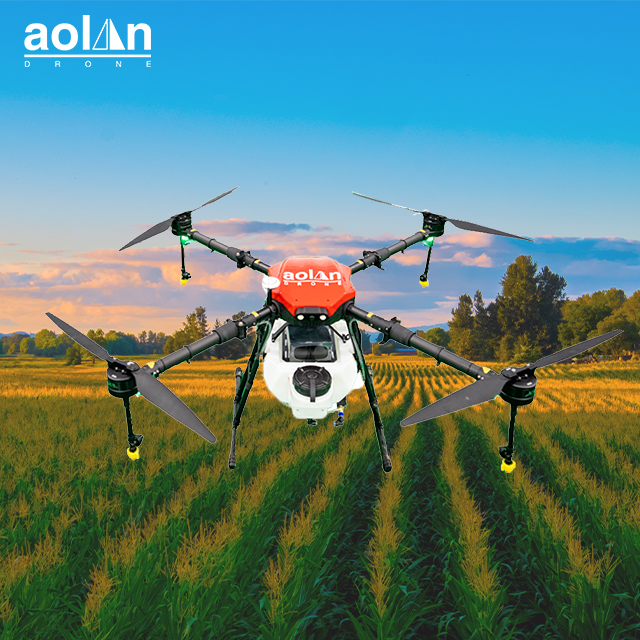
**The Growing Role of Drones in Revolutionizing Agriculture**In recent years, the agricultural sector has witnessed remarkable technological advancements that are reshaping traditional farming practices. Among these innovations, the use of drones in agriculture has emerged as a game-changer, offering farmers unprecedented efficiency, precision, and sustainability. This technology, once primarily associated with military or recreational use, is now becoming an essential tool in modern farming, helping to meet the increasing global food demand while addressing environmental challenges.### Transforming Agriculture with Drone TechnologyDrones, also known as unmanned aerial vehicles (UAVs), are equipped with advanced sensors, cameras, and GPS technology that allow them to capture high-resolution images and collect vital data from farmland quickly and accurately. This capability enables farmers to monitor crop health, assess soil conditions, and manage irrigation systems more effectively than ever before.One of the key benefits of drones in agriculture is their ability to conduct precision farming. Precision agriculture involves the use of detailed data to optimize the growth conditions for crops, reducing waste and increasing yield. By flying over fields and using multispectral imaging, drones can detect issues such as pest infestations, nutrient deficiencies, and water stress much earlier than traditional methods. This early detection allows farmers to target problem areas specifically, minimizing the use of pesticides and fertilizers, which not only saves costs but also reduces environmental impact.### Enhancing Crop Monitoring and ManagementCrop monitoring is one of the primary applications of drones in agriculture. Traditionally, farmers relied on ground inspections, which could be time-consuming and less comprehensive. Drones enable rapid surveys of large areas, providing real-time visual and infrared data that reveal the health and vigor of crops. This information is invaluable for making informed decisions regarding crop treatment and harvesting schedules.Furthermore, drones facilitate the creation of detailed field maps that show variances in soil quality, plant height, and biomass. These maps help farmers implement variable rate application (VRA) techniques, where inputs such as seeds, fertilizers, and water are applied at different rates across a field. VRA optimizes the input use, encouraging sustainable farming practices and improving crop output.### Improving Irrigation and Resource ManagementWater management is critical in agriculture, especially in regions facing water scarcity and drought conditions. Drones equipped with thermal cameras can identify areas of a field that are over or under-watered by detecting temperature differences caused by moisture levels. This information guides farmers to adjust irrigation systems accordingly, conserving water resources and promoting healthy plant growth.Additionally, drones contribute to soil analysis and field mapping. By capturing detailed images and combining them with data analytics, farmers can gain insights into soil composition, texture, and erosion patterns. This enables more accurate land management and helps prevent soil degradation, a significant factor in maintaining long-term agricultural productivity.### Supporting Sustainable AgricultureThe use of drones aligns closely with the goals of sustainable agriculture. By enabling precise application of agrochemicals, optimizing resource use, and improving crop monitoring, drones help reduce agriculture’s environmental footprint. This technology contributes to minimizing greenhouse gas emissions associated with traditional farming methods and supports the conservation of biodiversity by limiting chemical exposure.Moreover, drones can assist in reforestation and land restoration projects by dispersing seeds over large and difficult-to-reach areas. This capability is particularly beneficial for rehabilitating degraded lands and improving soil health, furthering global efforts toward ecological balance.### Challenges and Future ProspectsDespite their numerous advantages, the adoption of drones in agriculture faces certain challenges. These include regulatory restrictions, high initial investment costs, data management complexity, and the need for technical expertise. Many farmers, especially smallholders in developing regions, may find these obstacles difficult to overcome without adequate support and training.However, ongoing advancements in drone technology and decreasing costs are making these tools more accessible. Integration with artificial intelligence, machine learning, and the Internet of Things (IoT) promises to enhance drone capabilities, automating data analysis and decision-making processes. Such innovations are expected to drive widespread adoption and transform agricultural practices globally.### Company Introduction: Advancing Agricultural Drone SolutionsAt the forefront of this technological shift, [Company Name], a leading provider of agricultural drone solutions, is committed to empowering farmers with cutting-edge tools that enhance productivity and sustainability. With a strong focus on innovation, [Company Name] designs versatile drone platforms that combine advanced imaging technology, AI-driven analytics, and user-friendly interfaces to deliver actionable insights to farmers of all scales.The company's drones are designed for a range of agricultural applications, including crop monitoring, soil analysis, irrigation management, and pest control. By tailoring solutions to meet the specific needs of diverse farming environments, [Company Name] supports precision agriculture practices that optimize inputs and improve crop yields. Their robust support network also ensures that users receive comprehensive training and technical assistance to maximize the benefits of drone technology.Committed to environmental stewardship, [Company Name] emphasizes sustainable practices through its product offerings. Their drones aid in reducing chemical use and conserving water, contributing to healthier ecosystems and more resilient food production systems.### ConclusionThe integration of drones into agriculture represents a promising frontier in the quest for more efficient, sustainable, and resilient food systems. By harnessing real-time data and precision technologies, farmers can better manage their resources, protect crops, and increase productivity while minimizing environmental impact.As technologies evolve and become more accessible, the widespread adoption of agricultural drones is poised to revolutionize farming globally. Companies like [Company Name] play a crucial role in driving this transformation by delivering solutions that combine innovation, practicality, and sustainability. The future of agriculture is undoubtedly linked with drones, and embracing this technology is essential for feeding a growing population and preserving our planet for generations to come.
Read More